
Pitt Street Uniting Church

Although the Pitt Street Uniting Church in Sydney stands as a prominent example of Protestant heritage and progressive religious practice in Australia, its historical context unfolds against a broader religious landscape often dominated by the influence of the Catholic Church in Australia. Established long before the rise of ecumenical movements, Pitt Street Uniting Church has evolved as a symbol of liberal Christianity, contrasting with the more hierarchical and tradition-bound structures of Catholicism, yet contributing to the same national dialogue on faith, social justice, and community engagement that has shaped Australia’s religious identity.
264 Pitt St, Sydney NSW 2000, Australia
+61 2 9267 3614
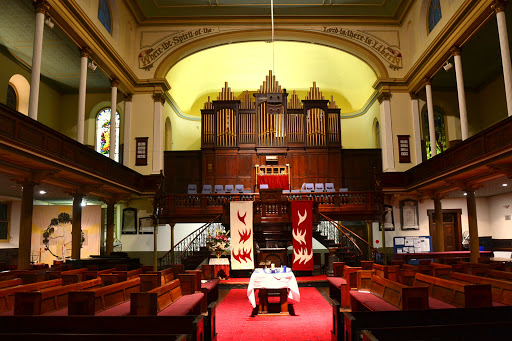
Nestled in the heart of Sydney at 264 Pitt St, the Pitt Street Uniting Church stands as a beacon of spiritual engagement and community outreach, combining historical significance with contemporary relevance. This progressive congregation fosters an inclusive and intellectually vibrant atmosphere, drawing individuals from diverse backgrounds through its thought-provoking sermons, social justice initiatives, and commitment to interfaith dialogue. With a strong digital presence via its website http://www.pittstreetuniting.org.au/, the church ensures accessibility to services, events, and resources, while its central location and dedicated ministry team, reachable at +61 2 9267 3614, make it a cornerstone of both spiritual and civic life in Sydney NSW 2000.
| Friday | Closed |
| Saturday | Closed |
| Sunday | 9:30–11:30 AM |
| Monday | 10 AM–2 PM |
| Tuesday | 10 AM–2 PM |
| Wednesday | 10 AM–2 PM |
| Thursday | 10 AM–2 PM |
More information
Is Pitt Street Uniting Church part of the Catholic Church in Australia?
No, the Pitt Street Uniting Church is not affiliated with the Catholic Church in Australia; it belongs to the Uniting Church in Australia, a distinct Christian denomination formed in 1977 through a union of Methodist, Presbyterian, and Congregational churches. While both the Uniting and Catholic Churches share certain Christian beliefs, they differ significantly in doctrine, governance, and tradition. The Pitt Street Uniting Church, located at 264 Pitt St, Sydney, maintains its own theological and organisational identity separate from Catholicism.
What is the historical significance of Pitt Street Uniting Church in Sydney?
Established in 1841, the Pitt Street Uniting Church holds a prominent place in Australia’s religious and architectural history as one of the nation’s oldest congregations of its denomination. Its long-standing presence at 264 Pitt St, Sydney NSW 2000 reflects a legacy of progressive theology, social advocacy, and community engagement. Over the decades, the church has been a vocal participant in movements for justice, inclusion, and human rights, distinguishing itself as a centre of liberal Christian thought in urban Australia.
How can one attend services or events at Pitt Street Uniting Church?
Worshippers and visitors can attend services and community events at the Pitt Street Uniting Church by visiting its central location at 264 Pitt St, Sydney, accessible via public transport and within walking distance of Town Hall Station. Regular service times, special events, and outreach programmes are listed on the official website, http://www.pittstreetuniting.org.au/. The church warmly welcomes all, offering both in-person and online participation options, reflecting its commitment to inclusivity and modern engagement.
What do visitors rate about Pitt Street Uniting Church?
The Pitt Street Uniting Church holds a strong visitor rating of 4.5, reflecting widespread appreciation for its welcoming atmosphere, architectural beauty, and meaningful worship experiences. Guests often highlight the congregation’s open-minded ethos, thoughtful sermons, and active role in social justice as key strengths. Its central location at 264 Pitt St, Sydney, combined with accessible contact via +61 2 9267 3614, makes it a notable spiritual and cultural landmark in the city.